History
AI COMPANY
2020s
Evolving into a Global AI Company by Strengthening Core Businesses Based on AI and Cooperating with Local and Global AI Players
SKT, the undisputed leader in the Korean mobile telecommunications market, is rapidly transforming into a global
AI company.
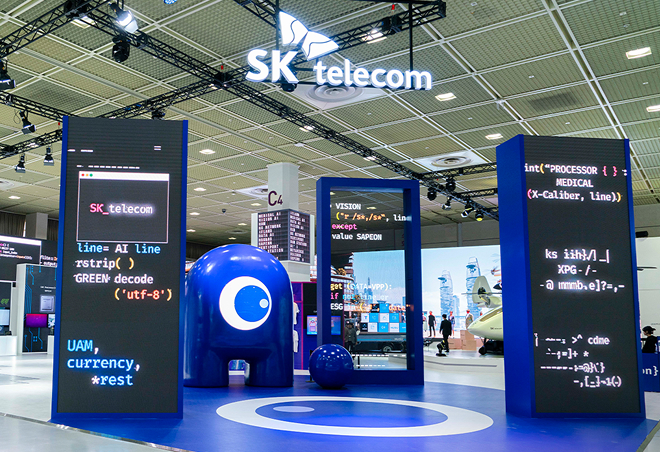
SKT has unveiled KoBERT, KoGPT-2, and KoBART, which are AI language models based on the Korean language, and cooperated with the National Institute of the Korean Language to develop AI Korean models since the late 2010s. Leveraging this capability, SKT launched the beta version of ‘A. (A-DoT)’, an AI service based on Korean GPT-3, in May 2022, and officially launched A. (A-DoT) in September 2023.

SKT is continuing its investment in AI hardware. It implemented the
AI accelerator project since the late 2010s, and launched the first Korean
AI semiconductor ‘SAPEON X220’ in 2020. X220 demonstrated its excellence at the time by outperforming NVIDIA’s GPU(A2) in a benchmark test. Then in November 2023, ‘X330,’ which is four times faster and two times more energy efficient than X220, was introduced, thus paving the way for a new wave of
AI innovations.

In addition to enhancing its own LLM ‘A.X LLM,’ SKT is pushing ahead with a multi-LLM strategy in cooperation with both domestic and international
AI players. It has invested USD 100 million in Anthropic to develop multilingual LLMs, and formed a strategic partnership with OpenAI. SKT has also invested in a Korean AI company named Konan Technology to target the enterprise market with customized LLMs.
NEW ICT
2010s
World's First 5G Commercialization...
Cloud, Metaverse and Media Innovation
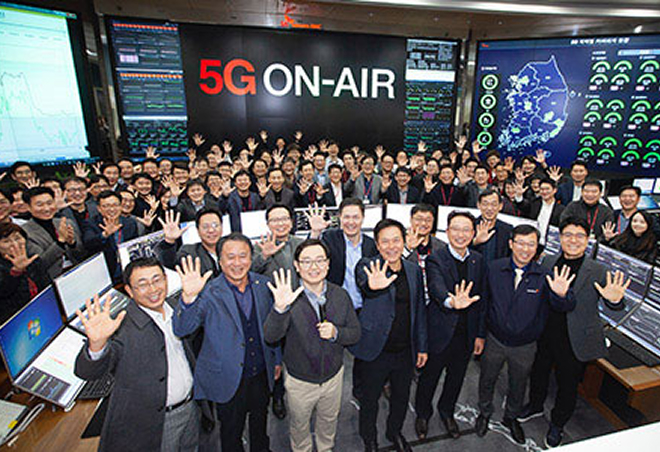
On April 3, 2019, SKT succeeded in commercializing 5G services for the first time in the world.
Since then, the company’s 5G business has rapidly grown, hitting a high of one million 5G subscribers on August 21 of the same year, and became the foundation for 5G convergence with various areas such as cloud, metaverse, and next-generation media.
In January 2019, SKT established CAST.ERA, a joint venture company to supply 5G ATSC 3.0 convergence with Sinclair, one of the largest U.S. television broadcasters. In July 2020, it released “5GX Cloud Games” with Microsoft, and in December, it commercialized “SKT 5GX Edge,” a 5G edge cloud service with Amazon Web Services. In July 2021, it launched a metaverse platform “ifland.” As such, the company has cooperated with global companies and released services in the future core ICT fields such as media, metaverse, games, cloud, and B2B based on the 5G technologies at the world’s highest level.
Acquisition of Hynix, Transforming Concerns into Opportunities...
Expansion into Semiconductors, Quantum Cryptography, Convergence Security
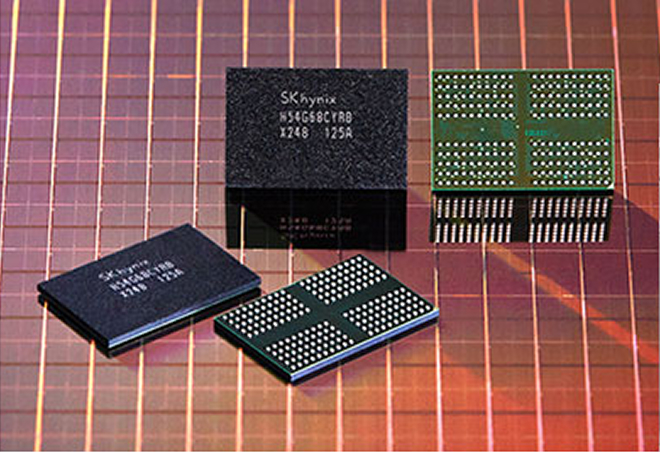
SKT has created a new business portfolio through aggressive M&As, such as Hynix in 2012, and IDQ (the world leader in quantum crypto solutions) and
SK Shieldus in 2018 in order to become a comprehensive ICT service provider.
In particular, Hynix, which had been under court receivership since 2001, had difficulty finding a new owner even three years after it declared the sale of the company in 2008.
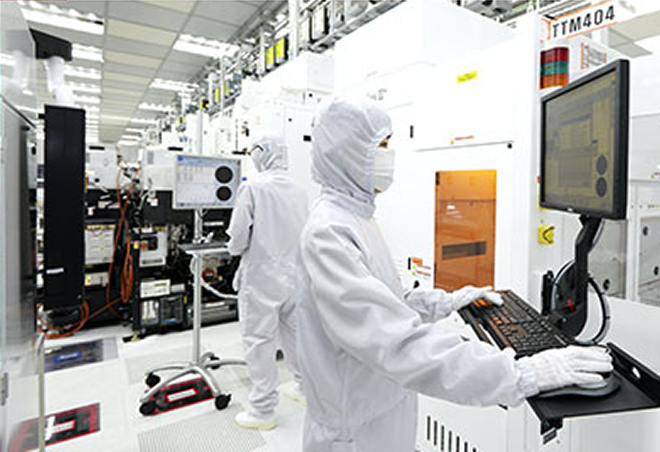
The semiconductor industry is known to experience a lot of ups and downs, and a player loses competitiveness or bleeds red ink profusely if management goes wrong for even a moment. Furthermore, this sector requires large-scale investments in trillions every year. For these reasons, no company both at home and abroad dared to acquire Hynix.
Also, there was a dominant opinion that a company acquiring Hynix would fall into a “winner’s curse” due to the decline in the semiconductor market and the influence of the chicken game.
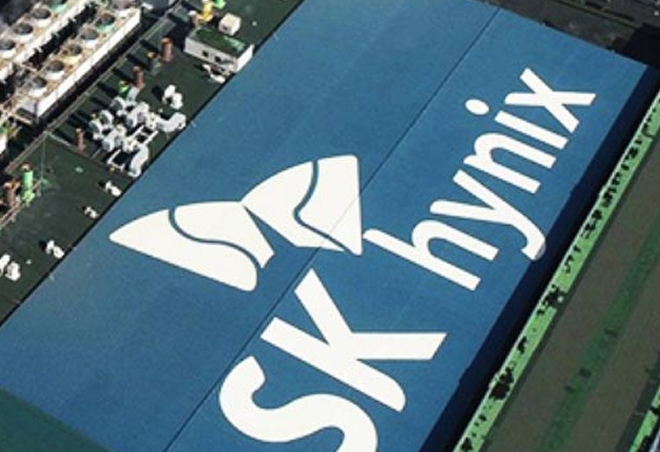
After years of analyzing the semiconductor industry, SK had confidence that semiconductors would represent Korea beyond the SK group. Accordingly, SKT acquired a 20.1% stake in Hynix for approximately KRW 3.4 trillion in 2012.
SK Hynix has maintained stable growth since it was incorporated as a subsidiary of SKT.
Now, it stands tall as a global semiconductor company representing Korea.
2000s
SKT, the Center of Innovation
SKT has been leading ICT innovation in Korea as well as the mobile communications field.
It has laid the foundation for the growth of various domestic mobile business operations by conducting them ahead of its time.
SKT has been leading ICT innovation in Korea as well as the mobile communications field.
It has laid the foundation for the growth of various domestic mobile business operations by conducting them ahead of its time.
In July 1999, SKT launched “TTL,” the industry's first mobile phone brand for the new generation, and in July 2006, it preemptively introduced the brand “T” that integrated the core values of the smartphone era.
In July 1999, SKT launched “TTL,” the industry's first mobile phone brand for the new generation, and in July 2006, it preemptively introduced the brand “T” that integrated the core values of the smartphone era.
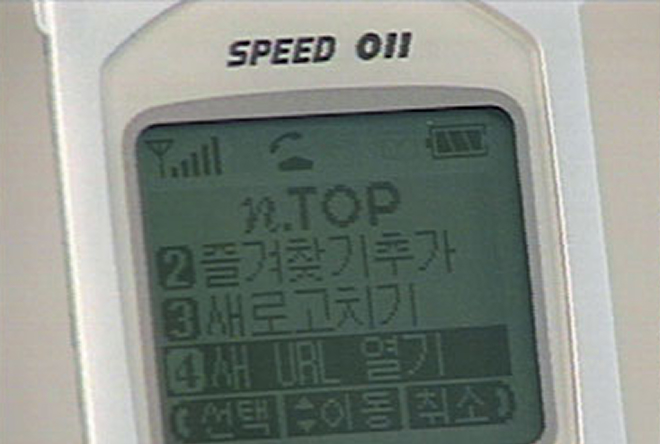
In December 1999, it released the wireless data service “n.TOP,” ushering in the era of mobile data communication that enabled users to have “Internet access while walking.” In 2002, the company launched “June,” a wired/wireless video service, and NATE, an integrated wired/wireless Internet service.

In 2004, SKT pioneered the mobile media content market by launching the wired/wireless music portal “Melon,” movie portal “Sizzle,” and 3D game portal “GXG” in sequence. In May 2005, it started satellite DMB broadcasting and presented a broadcasting and telecommunication convergence business.
It also introduced mobile financial services such as USIM chip-based credit cards and transportation cards, membership, and securities services ahead of its time. In addition, after continuous advancement, world’s first mobile-based navigation service “Nate Drive” was relaunched as “TMAP” in July 2007.
1990 ~ 2000s
“The Legendary CDMA”:
The History of SKT's First Mobile Communications

SKT (formerly Korea Mobile Telecom), which newly started as a private company, set a milestone in the mobile communications history by commercializing CDMA digital mobile phones in January 1996 for the first time in the world. In particular, with the spread of CDMA as a global standard, the position of Korea in mobile communications as the pioneer country of CDMA technology was further strengthened. This, in turn, served as an opportunity to localize the industries of mobile phone, semiconductors, display, and communication equipment.
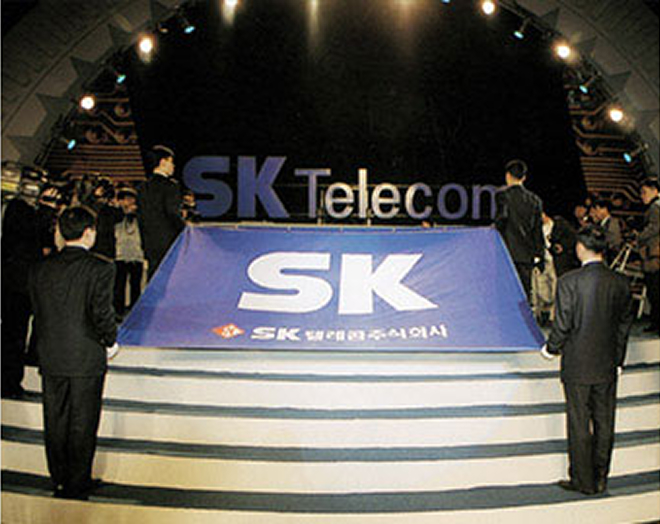
Rather than being content with the “legendary CDMA,” SKT took the lead in developing next-generation mobile communication technologies. It launched the world's first CDMA2000 1X commercial service in October 2000, and started providing the IMT-2000 commercial service in Seoul in December 2003. In addition, the company sharpened its technological edge in the 3G network competition by being the first in the world once again to develop and commercialize the technology. In May 2006, it started providing the world's first mobile-based HSDPA commercial service, opening the data communications era, and in December 2008, it commercialized HSUPA of 5.76Mbps, which dramatically improved upload speed, for the first time in the world.

In July 2011, SKT commercialized the 4G LTE service for the first time in Korea. Furthermore, in June 2013, it released LTE-A, which was twice as fast as the existing LTE service, and in January 2014, it introduced world’s first 3 Band
LTE-A technology with a speed of up to 300Mbps, demonstrating its top-tier communications technologies again in the LTE era.
1990s
Another Leap from Korea Mobile Telecom to SKT
Korea Mobile Telecom was acquired and privatized by SK Group (then Sunkyung Group) through an open bidding in January 1994, in accordance with the government's privatization policy to strengthen the competitiveness of the domestic telecommunications industry in the early 1990s.

SK laid the foundation for advancing into the information and communications business. It launched a telecommunications team in the Business Planning Division of the US office in 1984. It also established Uchronix, a local corporation in New Jersey, United States, in October 1989; Sunkyung Information System,
a joint venture with US CSC in 1990; and Sunkyung Telecom in 1991 (name changed to Daehan Telecom in 1992), one after another.
SK's acquisition of Korea Mobile Telecom was the fruit of these efforts and meticulous preparation over 10 years.

SKT changed its name from Korea Mobile Telecom to SKT in March 1997, solidifying its position as a representative player in the domestic mobile telecommunications sector. Even in terms of subscribers, the company also grew to bear comparison with world-class mobile telecommunications companies.
1980s
The Beginning of Mobile Communications in Korea

Korea Mobile Telecom Services, the predecessor of SKT, began the history of mobile communications in March 1984, launching vehicle phones and wireless paging services. It introduced the portable mobile phone service for the first time in Korea upon the hosting of the 1988 Seoul Olympics.
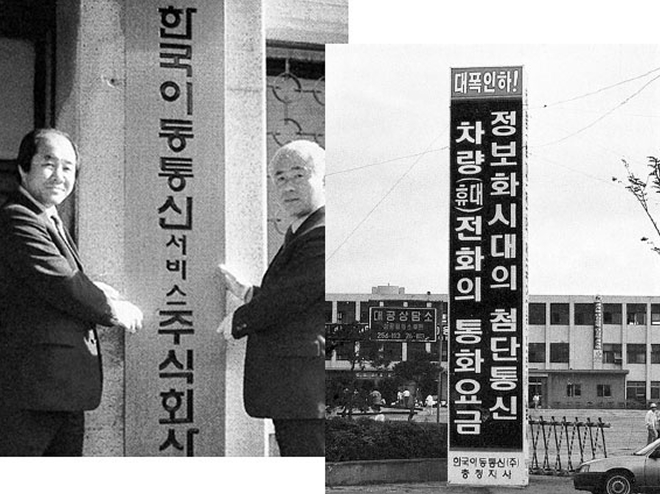
Korea Mobile Telecom (formerly Korea Mobile Telecom Services) also made a groundbreaking advancement in call quality around 1990. In particular, it served as the driving force behind the development of the domestic mobile communications industry by leading the localization of various communication equipment and independence of operation technology. Through these efforts, Korea Mobile Telecom could acquire more than one million subscribers by December 1991, opening the era of popularization of mobile communications.